Yaks: The Backbone of Life in the Nepal Himalayas
The yak is one of the most iconic animals of the Himalayas and an essential part of life in Nepal's high mountain regions. Renowned for its strength, thick shaggy coat, and remarkable ability to survive in harsh alpine environments, the yak has supported Himalayan communities for centuries. From transporting supplies across rugged mountain trails to providing milk, butter, cheese, wool, and fuel, yaks continue to play a vital role in the culture, economy, and daily life of the high Himalayas.
For many travelers, seeing a caravan of yaks crossing mountain trails is one of the most unforgettable experiences during Trekking in Nepal. These gentle giants are commonly encountered on famous Himalayan routes in the Everest, Annapurna, Langtang, Manaslu, Upper Mustang, Dolpo, and Kanchenjunga regions, where they remain an essential means of transportation in remote areas beyond road access. They are not only working animals but also an enduring symbol of the Himalayan way of life.
Beyond their practical importance, yaks represent resilience, self-reliance, and the close relationship between mountain communities and nature. Whether you are exploring a remote Himalayan destination, planning one of our Tours in Nepal, or preparing for your adventure with our Nepal Travel Information Guide, learning about yaks provides a deeper understanding of Nepal's mountain culture and traditions. With more than 35 years of Himalayan experience, Mountain King Treks & Expedition Pvt. Ltd. proudly introduces travelers to Nepal's spectacular landscapes, rich heritage, and authentic Himalayan lifestyle.
What Is a Yak?
The yak (Bos grunniens) is a large, long-haired bovine native to the Himalayan region and the Tibetan Plateau. Perfectly adapted to life at high altitudes, yaks thrive in cold climates where many other animals cannot survive. Their thick coat protects them from freezing temperatures, while their powerful lungs and large hearts enable them to live comfortably above 3,500 meters.
Domestic yaks are widely raised by Himalayan communities for transportation, dairy products, wool, and farming, while wild yaks are found only in a few remote areas of the Tibetan Plateau. In Nepal, the yaks seen by most visitors are domesticated animals that have worked alongside local families for generations.
Where Do Yaks Live in Nepal?
Yaks are found mainly in Nepal's high Himalayan regions, where cool temperatures, alpine meadows, and rugged mountain terrain provide ideal living conditions. Visitors are most likely to encounter yaks while trekking through some of the country's most spectacular mountain landscapes.
Everest Region
The Everest region is one of the best places to see yaks in Nepal. They regularly transport food, fuel, trekking equipment, and other supplies between mountain villages such as Namche Bazaar, Tengboche, Dingboche, Lobuche, and Gorakshep, where road access is unavailable.
Annapurna Region
Yaks are commonly seen grazing in alpine pastures and carrying supplies through the upper Annapurna region, particularly around Manang, Yak Kharka, and Thorong Phedi. They are an important part of daily life for communities living along the Annapurna Circuit.
Langtang Region
The Langtang Valley is famous for traditional yak farming. Many local families produce fresh yak milk, butter, cheese, and yogurt, giving trekkers the opportunity to experience authentic Himalayan dairy products while enjoying spectacular mountain scenery.
More Places to See Yaks in Nepal
Manaslu Region
The Manaslu region is one of Nepal's most authentic Himalayan destinations, where yaks remain an essential part of everyday life. Along the Manaslu Circuit Trek, visitors will often see yak caravans transporting food, building materials, fuel, and trekking supplies between remote mountain villages. During the summer months, yaks also graze in high alpine pastures surrounded by spectacular Himalayan scenery.
Upper Mustang
The ancient Kingdom of Mustang offers a unique landscape of dramatic cliffs, deep valleys, and traditional Tibetan-influenced villages. Yaks are commonly raised by local families for milk, butter, wool, and transportation. Their ability to thrive in the dry, high-altitude environment makes them one of the region's most valuable domestic animals.
Dolpo Region
One of Nepal's most remote and least-visited trekking destinations, Dolpo is home to traditional Himalayan communities that continue to depend on yaks for transportation and daily life. Trekking through Dolpo provides visitors with an authentic glimpse into centuries-old mountain traditions where yaks remain indispensable.
Kanchenjunga Region
The Kanchenjunga region in eastern Nepal is another excellent place to encounter yaks. They are frequently seen grazing in alpine meadows or carrying supplies through isolated villages surrounded by some of the world's highest mountains. Their presence reflects the traditional mountain lifestyle that has changed little over generations.
Why Are Yaks Important in Himalayan Life?
For centuries, yaks have been essential to the survival of people living in Nepal's high mountain regions. In remote villages where roads are limited or nonexistent, they remain one of the most reliable forms of transportation and an important source of food, clothing, and income.
Transportation Across Mountain Trails
Yaks carry food, fuel, construction materials, trekking equipment, and other essential supplies between remote villages and mountain lodges. Their strength and sure-footed nature allow them to travel safely across steep trails, suspension bridges, and high mountain passes where vehicles cannot operate.
Dairy Products
Yak milk is highly nutritious and used to produce a variety of traditional Himalayan foods, including butter, cheese, yogurt, and other dairy products. Many trekking lodges serve locally produced yak cheese, which has become a favorite among visitors exploring Nepal's mountain regions.
Wool and Clothing
Yak wool provides excellent insulation against the cold Himalayan climate. Local communities use it to make blankets, rugs, ropes, tents, bags, and warm clothing that are both practical and durable.
Farming and Daily Life
In some Himalayan communities, yaks also assist with farming, carrying harvests, and transporting household goods. Their contribution supports the traditional way of life that continues to flourish in Nepal's high-altitude villages.
Yaks and Sherpa Culture
Yaks are deeply connected to the culture and traditions of the Sherpa people and other Himalayan communities. They represent strength, endurance, prosperity, and harmony with nature. For generations, families have relied on yaks not only for their livelihood but also as trusted companions capable of surviving the demanding conditions of the high Himalayas.
Visitors trekking through the Everest and other Himalayan regions often witness the close relationship between local people and their yaks. From colorful yak caravans carrying supplies to peaceful herds grazing beneath snow-capped peaks, these remarkable animals remain an unforgettable symbol of mountain life in Nepal.
Yak Caravans on Nepal's Trekking Trails
One of the most unforgettable sights while trekking in Nepal is watching a traditional yak caravan making its way through the Himalayas. Loaded with food, fuel, trekking equipment, and everyday supplies, these gentle animals travel along narrow mountain trails connecting remote villages that have no road access.
Yak caravans are an essential part of life in many Himalayan regions. They regularly transport goods to mountain lodges, monasteries, and local communities, helping support both residents and the trekking industry. Encountering a yak caravan is a unique cultural experience that reminds visitors how people have lived and traveled in the Himalayas for centuries.
Yak Milk, Cheese, Butter, and Traditional Himalayan Food
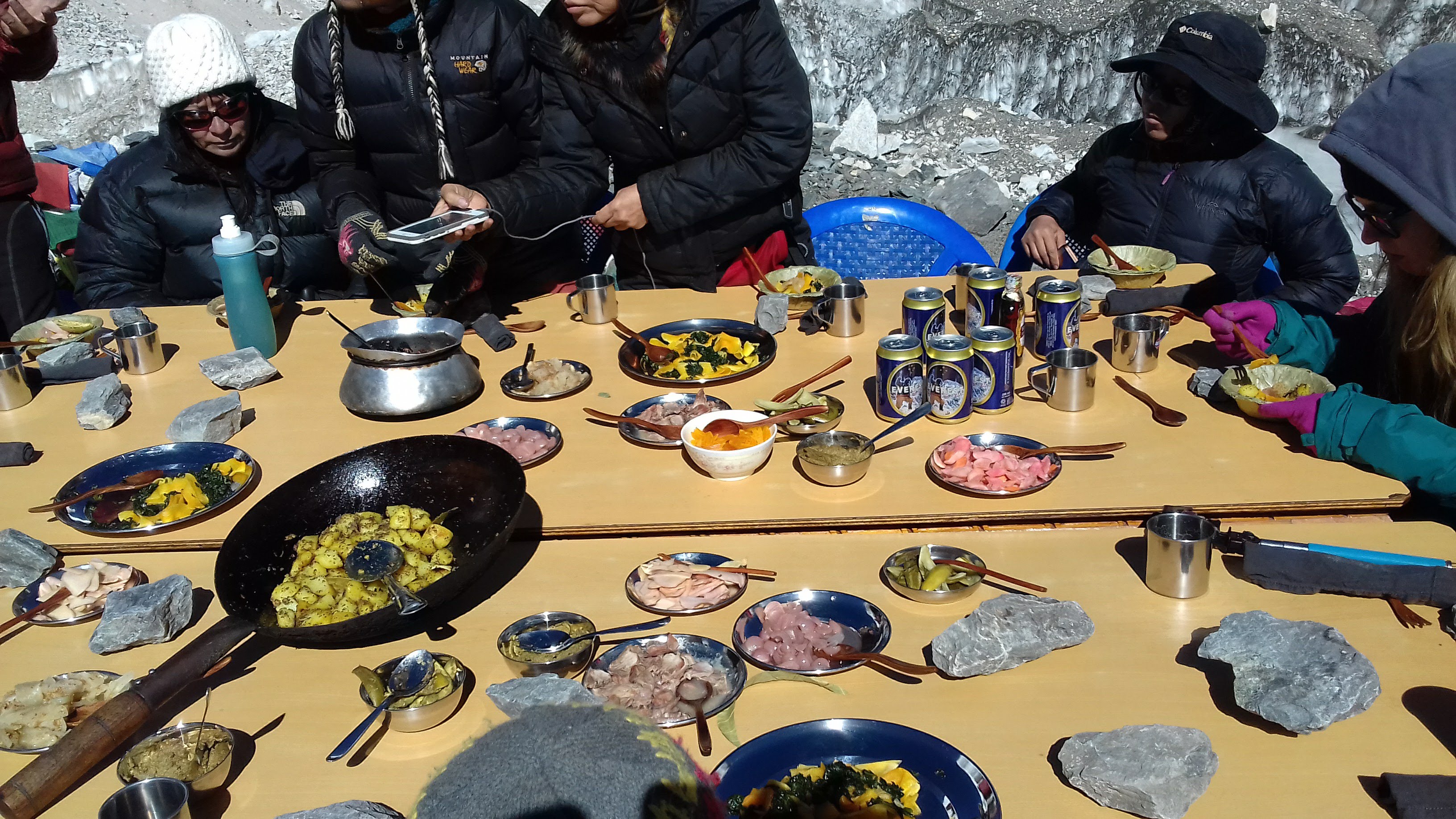
Yaks provide nutritious dairy products that are an important part of daily life in Nepal's high mountain communities. Their rich milk is used to produce cheese, butter, yogurt, and other traditional foods enjoyed by local families and trekkers alike.
Yak cheese is one of Nepal's most famous mountain products. Produced in several Himalayan regions, it has a firm texture and distinctive flavor, making it a popular snack during trekking adventures. Yak butter is also traditionally used to prepare butter tea, a warm and nourishing drink that helps people stay comfortable in cold mountain conditions.
These traditional foods offer visitors an authentic taste of Himalayan culture while supporting local communities that continue centuries-old dairy traditions.
How Yaks Survive Life Above 4,000 Meters
Yaks are perfectly adapted to one of the world's harshest environments. Their thick double-layered coat protects them from freezing temperatures, while their powerful lungs and large hearts allow them to thrive at altitudes where oxygen levels are much lower than at sea level.
Broad hooves provide excellent grip on rocky trails, snow, and ice, making yaks remarkably sure-footed even in challenging terrain. Their ability to graze on alpine grasses and survive long winters makes them one of the most resilient animals in the Himalayas.
These natural adaptations have enabled yaks to support mountain communities for generations, making them an irreplaceable part of life in Nepal's high-altitude regions.
Safety Tips When Meeting Yaks on the Trail
Seeing yaks during a trek is an exciting experience, but it is important to give them plenty of space and respect.
When a yak caravan approaches, always move to the uphill side of the trail whenever possible and follow your guide's instructions. Avoid standing on the edge of steep paths, as the animals often carry wide loads that require extra space.
Do not startle or attempt to touch the yaks, especially while they are transporting supplies. Allow them to pass calmly before continuing your trek. Respecting these working animals helps ensure a safe experience for both trekkers and local communities.
Interesting Facts About Yaks
- Yaks can live at elevations above 5,000 meters.
- Their thick coat protects them from temperatures well below freezing.
- A yak's large lungs and heart help it thrive in low-oxygen environments.
- Yak caravans remain one of the most reliable transportation methods in remote Himalayan regions.
- Yak milk is richer in fat and protein than cow's milk.
- Yak cheese is one of Nepal's best-known mountain dairy products.
- Yaks have supported Himalayan communities for hundreds of years.
- They are considered one of the most iconic symbols of life in the Nepal Himalayas.
Frequently Asked Questions
What is a yak?
A yak is a large, long-haired bovine native to the Himalayas and the Tibetan Plateau. It is perfectly adapted to high-altitude environments and plays an essential role in the daily lives of Himalayan communities by providing transportation, dairy products, wool, and other valuable resources.
Where can I see yaks in Nepal?
Yaks can be seen in many of Nepal's high mountain regions, including the Everest, Annapurna, Langtang, Manaslu, Upper Mustang, Dolpo, and Kanchenjunga regions. They are commonly encountered while trekking through remote Himalayan villages and alpine pastures.
At what altitude do yaks live?
Yaks generally live above 3,000 meters and are most commonly found between 3,500 and 5,500 meters, where the cool climate and alpine grasslands provide ideal conditions.
What do yaks eat?
Yaks feed mainly on alpine grasses, herbs, mosses, shrubs, and other mountain vegetation. During the warmer months, they graze in high Himalayan pastures, while in winter they continue searching for vegetation beneath the snow.
Are yaks dangerous?
Yaks are generally calm and gentle animals. However, they are large and powerful, so trekkers should always give them plenty of space, especially when they are carrying loads along narrow mountain trails. Following your guide's instructions helps ensure a safe and enjoyable trekking experience.
What products come from yaks?
Yaks provide milk, cheese, butter, yogurt, wool, hides, and natural fuel from dried dung. These products remain important for the traditional lifestyle and economy of many Himalayan communities.
Can tourists taste yak cheese in Nepal?
Yes. Yak cheese is widely available in many Himalayan trekking regions, particularly in Langtang, Everest, and other mountain areas. It is a popular local specialty that many trekkers enjoy during their journey.
For more travel advice, trekking information, and practical tips, visit our comprehensive Nepal Travel FAQs.
Experience Himalayan Mountain Life with Mountain King Treks
A journey through Nepal's Himalayas is about much more than reaching spectacular viewpoints. It is an opportunity to experience authentic mountain culture, meet welcoming local communities, discover centuries-old traditions, and witness remarkable animals like the yak that continue to shape life in the high mountains.
Whether you dream of trekking to Everest Base Camp, exploring the Annapurna Circuit, discovering the remote valleys of Manaslu and Dolpo, or visiting the hidden villages of Langtang and Kanchenjunga, Mountain King Treks & Expedition Pvt. Ltd. is here to help you experience the true spirit of the Himalayas.
With more than 35 years of Himalayan experience, our local team provides professionally organized trekking adventures, cultural tours, peak climbing expeditions, wildlife experiences, and customized holidays designed to create unforgettable memories.
Contact Us – Receive a free consultation and expert travel advice.
Customize Your Trip – Let us create your perfect Himalayan adventure.
WhatsApp / Call: +977-9841566449
Email: info@mountainkingtrek.com
WhatsApp: +977-9841566449