Everest Region Trekking
Trekking region

Everest Region Trekking

Everest Region Trekking in Nepal offers iconic Himalayan adventures including Everest Base Camp, Sherpa culture, glaciers, and breathtaking mountain views in the Khumbu region.

Introduction to Everest Region Trekking

Everest Region Trekking in Nepal is one of the most legendary and inspiring Himalayan adventures in the world, attracting trekkers and mountaineers to the heart of the Khumbu region every year. Home to Mount Everest (8,848.86 m), the highest peak on Earth, this spectacular region offers dramatic mountain scenery, massive glaciers, deep valleys, alpine forests, traditional Sherpa villages, and ancient Buddhist culture surrounded by some of the world’s most iconic Himalayan peaks.

Located within the renowned Sagarmatha National Park, a UNESCO World Heritage Site, the Everest region is famous not only for its breathtaking landscapes but also for its rich cultural and mountaineering history. The region gained worldwide recognition after the historic first ascent of Mount Everest by Sir Edmund Hillary and Tenzing Norgay Sherpa in 1953, while the Sherpa people have long been known for their deep connection to the Himalayas, Buddhist traditions, and world-class mountaineering skills.

Everest Region Trekking is much more than reaching a destination—it is a journey through Himalayan culture, spirituality, and natural beauty. Trekkers walk through colorful Sherpa settlements, cross suspension bridges decorated with prayer flags, visit ancient monasteries like Tengboche, and enjoy ever-changing mountain scenery throughout the trail.

The region offers trekking experiences for every type of traveler, from scenic cultural journeys to challenging high-altitude adventures. Popular routes such as Everest Base Camp Trek, Everest Three High Passes Trek, Gokyo Lakes Trek, Everest View Trek, and Pikey Peak Trek each provide unique experiences, combining spectacular Himalayan views with authentic local culture and unforgettable trekking memories.

Whether you dream of standing at Everest Base Camp, watching sunrise from Kala Patthar, exploring the peaceful Gokyo Lakes, or experiencing traditional Sherpa hospitality, Everest Region Trekking in Nepal offers a once-in-a-lifetime Himalayan adventure filled with natural wonder, cultural depth, and extraordinary mountain experiences.

For professionally organized itineraries, experienced local guides, domestic flight arrangements, trekking permits, and authentic Himalayan journeys, travelers can explore carefully designed trekking packages with Mountain King Treks, a trusted Nepal-based trekking company specializing in Everest Region Trekking and remote Himalayan adventures across Nepal.

Popular Everest Region Trekking Packages

Explore our most popular Everest region trekking packages for detailed itineraries, trip cost, difficulty, duration, and complete trekking information.

Each trekking package offers unique Himalayan scenery, Sherpa culture, mountain views, trekking difficulty levels, and unforgettable adventure experiences in the Everest region.

Why Everest Region Trekking is Famous Worldwide

The Everest Region Trekking in Nepal is globally famous because it combines the world’s highest mountains with deeply rooted Himalayan culture and world-class adventure trekking routes.

Trekkers from around the world come here to experience:

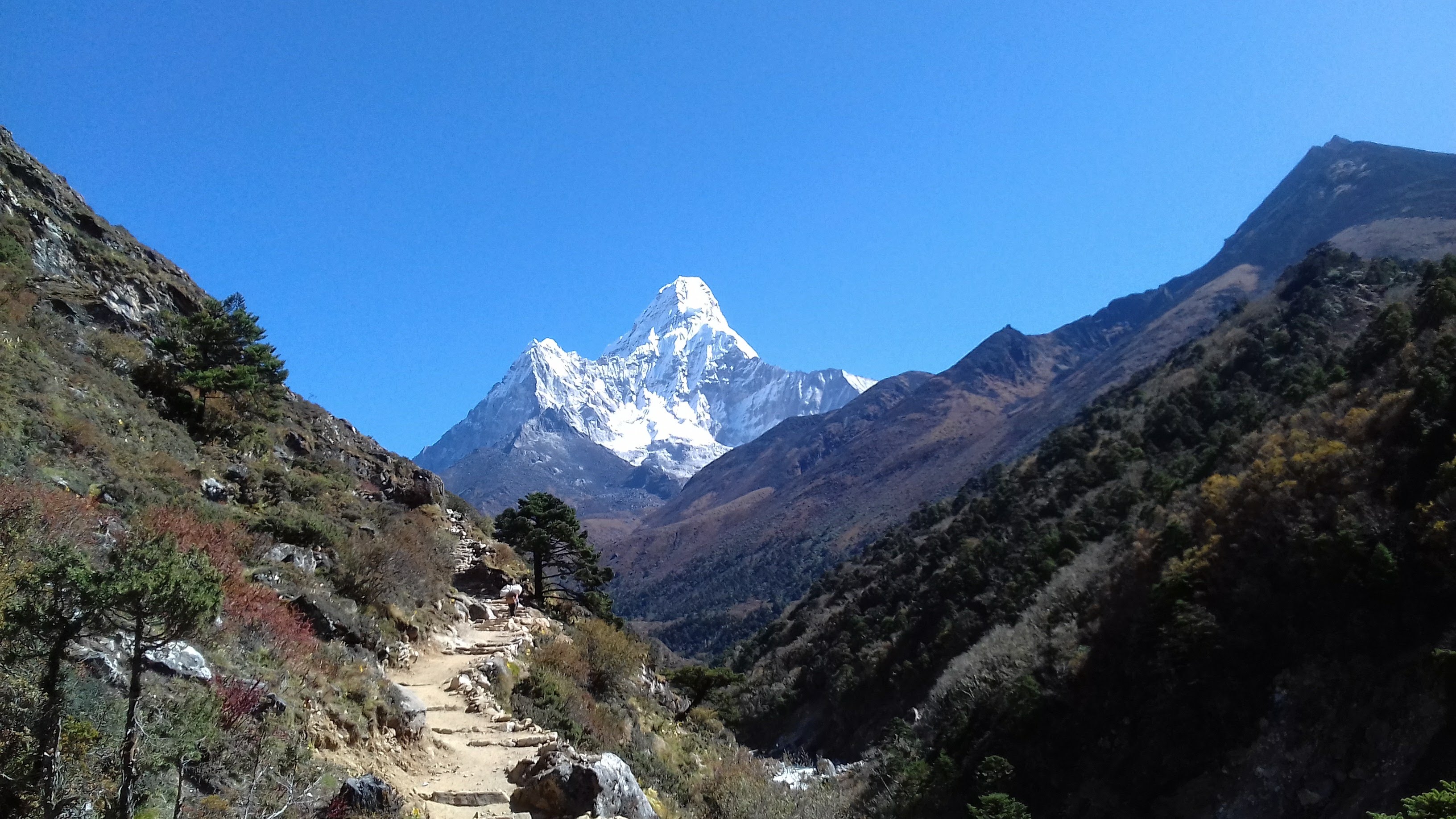
  • Close-up views of Mount Everest, Lhotse, Nuptse, Ama Dablam, and Cho Oyu
  • World-famous trekking routes like Everest Base Camp Trek and Three High Passes Trek
  • Authentic Sherpa villages and Buddhist culture
  • Ancient monasteries and spiritual mountain life
  • High suspension bridges, glaciers, and dramatic Himalayan landscapes

The Everest region is also known as the birthplace of legendary mountaineering history, where climbers from across the globe gather before attempting Everest expeditions.

Another major reason for its popularity is its trekking diversity. From luxury helicopter tours to remote high-altitude expeditions, Everest trekking can be customized for beginners, families, photographers, and experienced mountaineers.

Best Time for Everest Region Trekking

The Everest trekking season is divided into four main periods:

Spring Season (March–May)

Spring is one of the best times for Everest trekking. The weather is stable, rhododendron forests bloom, and the mountains remain clear most days. This is also peak climbing season in Everest Base Camp.

Autumn Season (September–November)

Autumn is considered the best trekking season in Nepal. Skies are crystal clear, temperatures are comfortable, and visibility is excellent for Himalayan views.

Winter Season (December–February)

Winter offers peaceful trails and fewer trekkers. Lower regions remain accessible, but higher passes become cold and snowy.

Monsoon Season (June–August)

Monsoon brings rain, clouds, and possible flight delays, but lower valleys remain green and beautiful. Trekking is quieter during this season.

Everest Region Trekking Difficulty and Altitude

Everest trekking routes range from easy scenic hikes to extreme high-altitude expeditions, offering something for every level of trekker. Proper planning and gradual acclimatization are essential due to significant elevation gain in the Khumbu Himalayas.

Trekking Difficulty Levels

  • Easy Treks: Everest View Trek, Everest Panorama Trek
  • Moderate Treks: Everest Base Camp Trek, Gokyo Lakes Trek
  • Challenging Treks: Everest Three High Passes Trek, Island Peak Climbing

Key High Altitude Points & Elevation

The Everest region includes some of the highest trekking destinations in the world:

  • Pikey Peak View Point: 4,065 m
  • Namche Bazaar: 3,440 m
  • Tengboche Monastery: 3,867 m (near Ama Dablam views)
  • Ama Dablam Base Camp: ~4,600 m
  • Dudh Kunda Lake: 4,560 m
  • Gokyo Lakes: 4,700–5,000 m (main lakes system)
  • Everest Base Camp: 5,364 m
  • Kala Patthar: 5,545 m

High Mountain Passes (Everest Region)

  • Kongma La Pass: 5,535 m (Three High Passes Trek)
  • Cho La Pass: 5,420 m
  • Renjo La Pass: 5,360 m

Important Altitude & Safety Advice

Most Everest trekking routes cross elevations between 3,500 m and 5,500 m, making altitude the most important factor in this region.

Proper acclimatization, slow ascent, hydration, and guidance from experienced trekking professionals are essential for a safe and successful journey in the Himalayas.

Sherpa Culture, Monasteries, and Himalayan Lifestyle

The Everest region is the homeland of the Sherpa community, one of the most respected mountain cultures in the world.

Sherpas are known for:

  • Mountaineering expertise
  • Strong Buddhist faith
  • Warm hospitality
  • Deep connection with the Himalayas

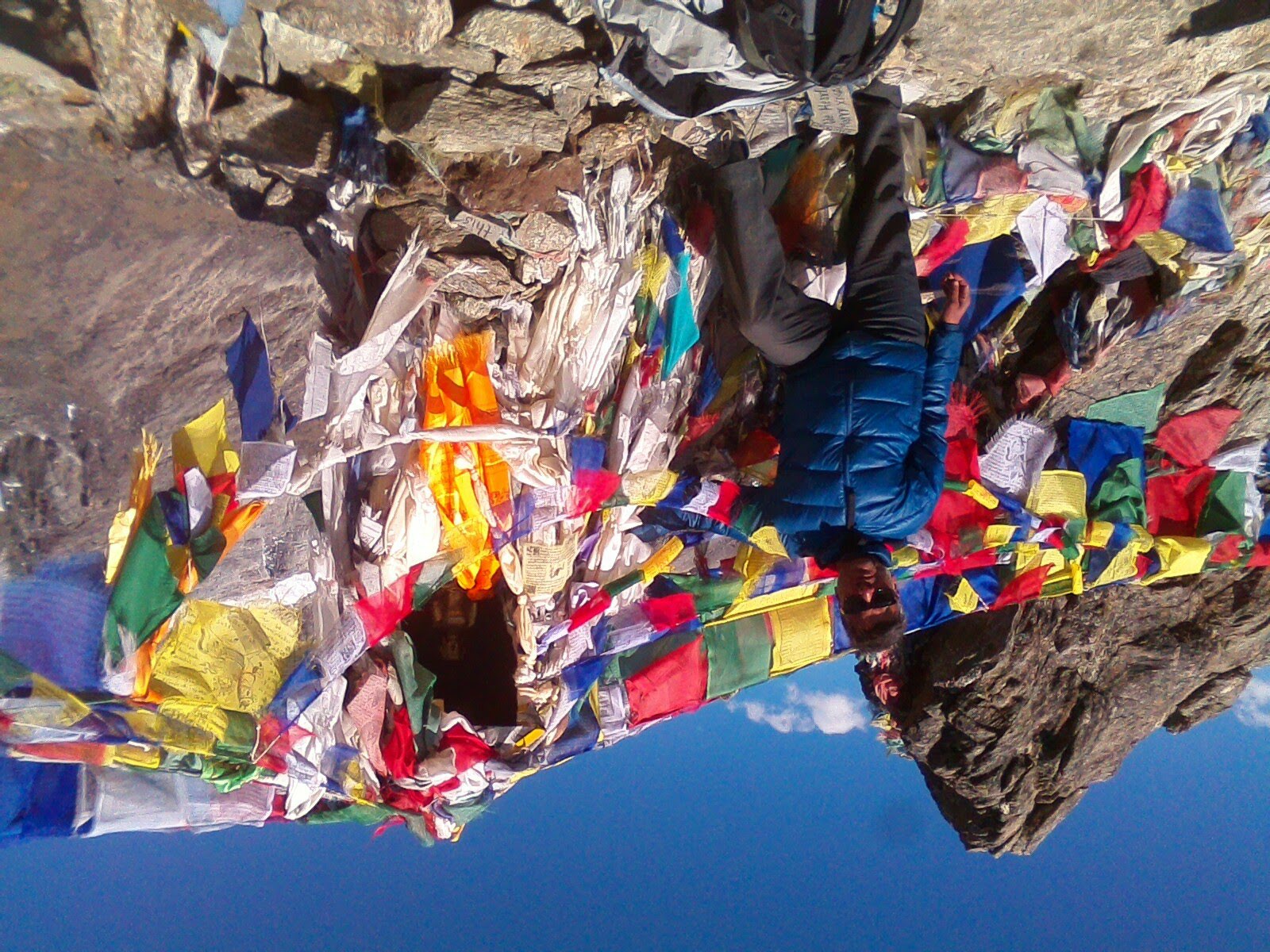
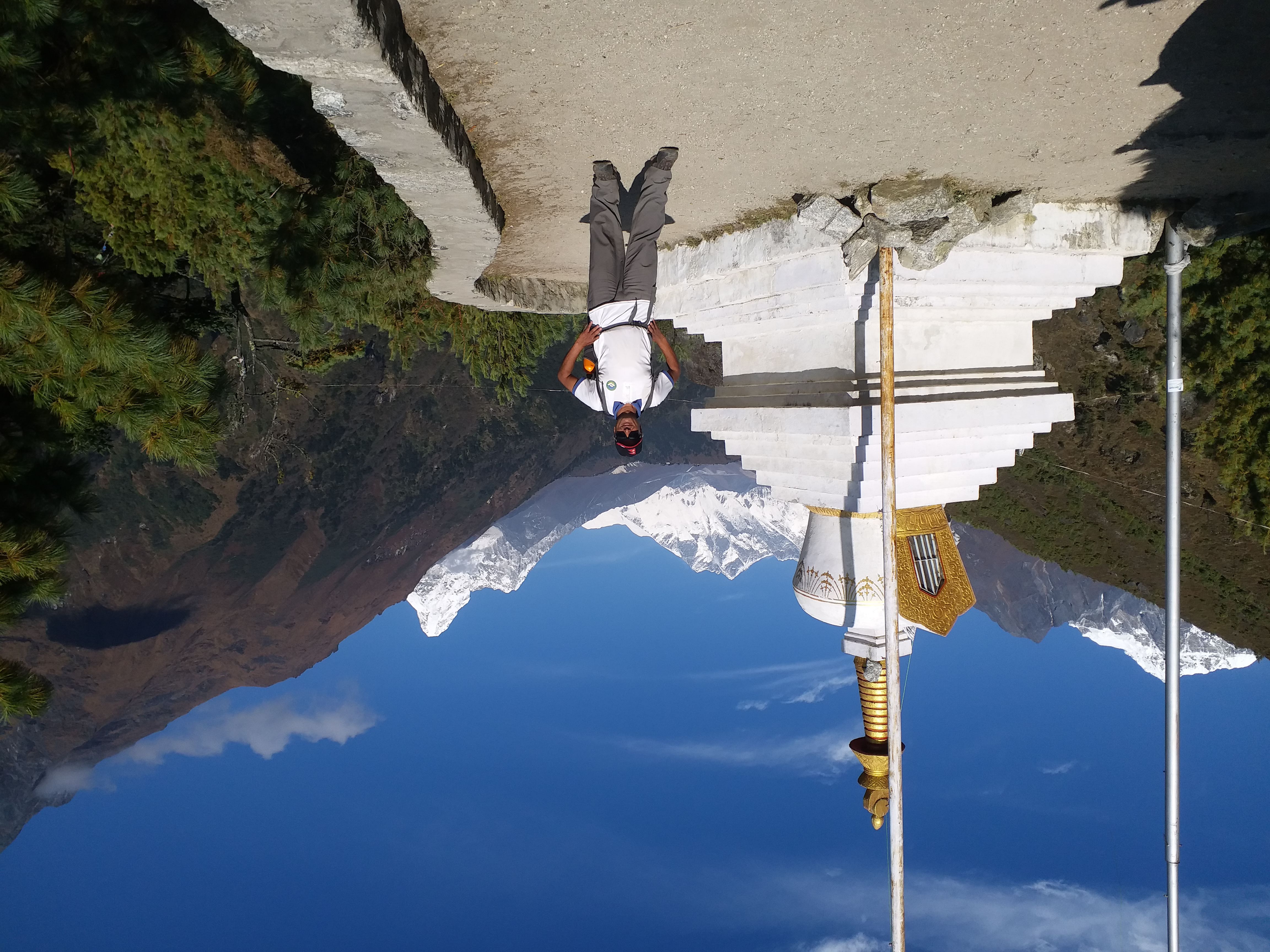
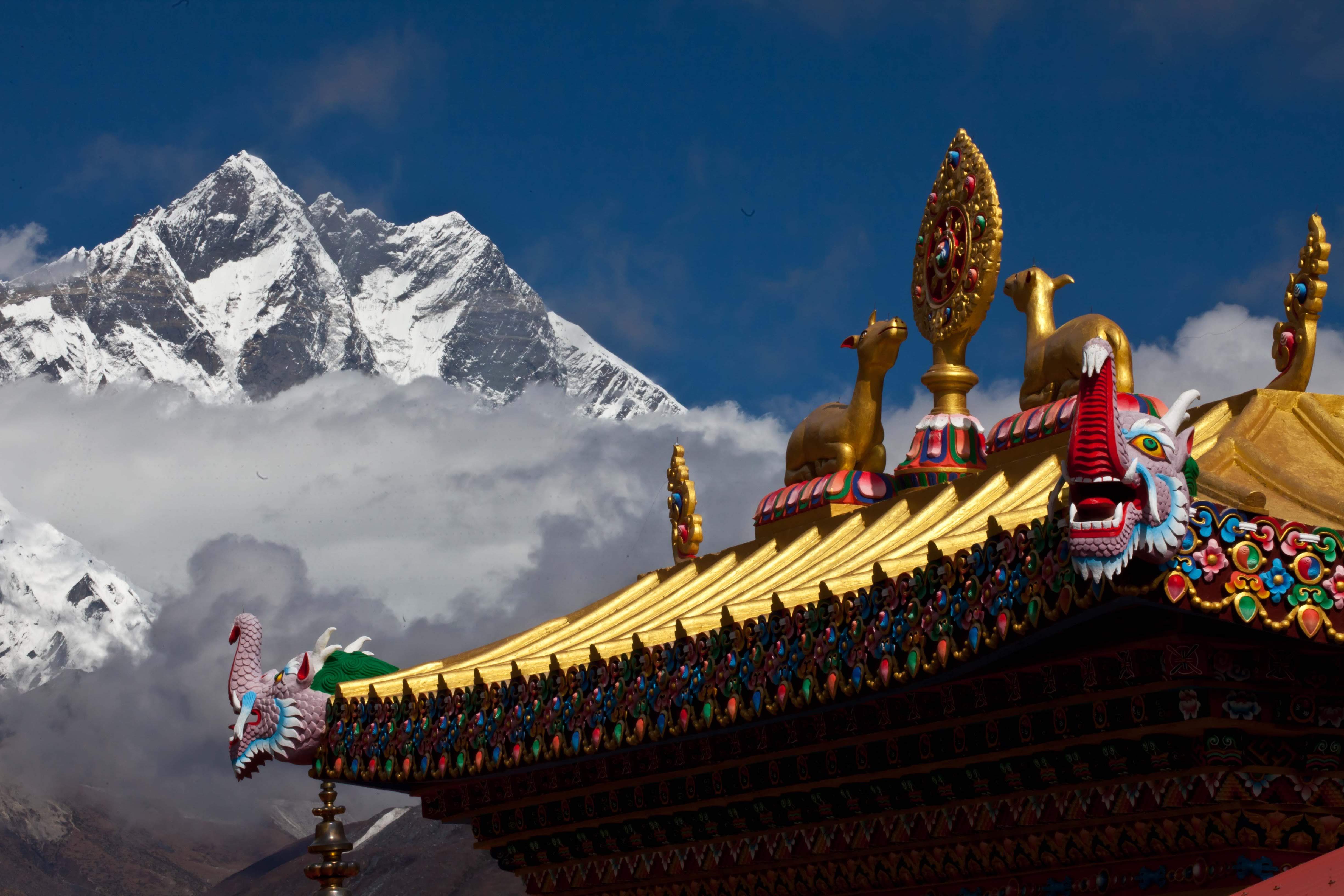
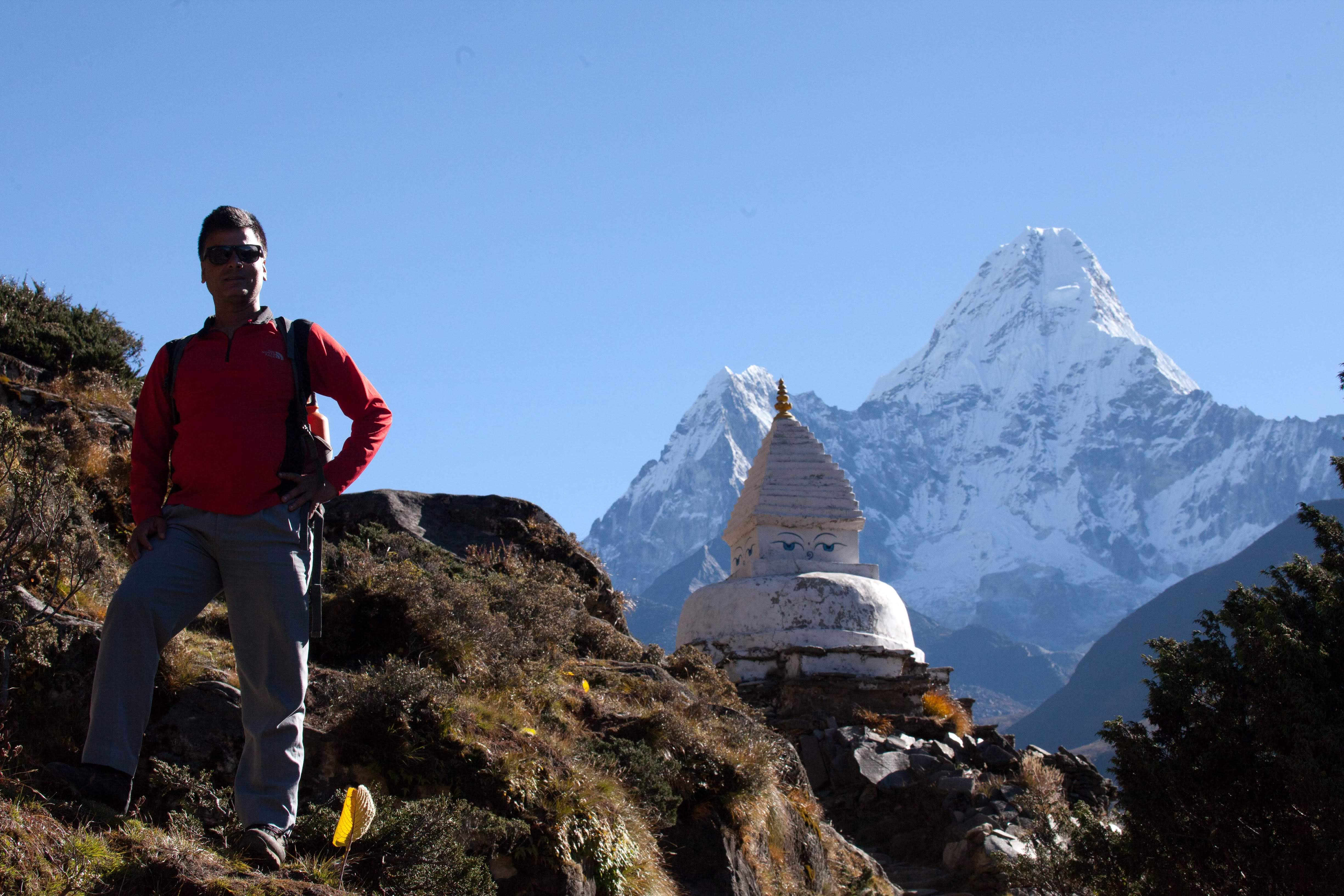
Throughout the trek, visitors see prayer flags, mani walls, chortens, and ancient monasteries. The most famous monastery is Tengboche Monastery, a spiritual center surrounded by stunning mountain views.

Festivals like Mani Rimdu bring colorful cultural performances, mask dances, and religious ceremonies that reflect centuries-old Himalayan traditions.

Sagarmatha National Park and Himalayan Wildlife

Everest trekking routes pass through Sagarmatha National Park, a protected area rich in biodiversity and natural beauty.

Wildlife includes:

  • Snow leopard (rare)
  • Himalayan tahr
  • Musk deer
  • Himalayan monal (national bird of Nepal)
  • Various pheasants and alpine birds

The landscape changes from dense forests to alpine meadows, glaciers, and rocky high-altitude terrain.

Lukla Flights and Transportation Information

The journey to the Everest region usually begins with a scenic flight to Lukla Airport, one of the world’s most thrilling mountain airports and the main gateway to the Khumbu Himalayas.

Peak Season Flight Operations

During the peak trekking seasons of October, November, April, and May, Kathmandu Airport becomes heavily congested due to high international and domestic flight traffic. Because of this, most Lukla flights are operated from Ramechhap Airport (Manthali Airport), located about 4–5 hours’ drive from Kathmandu.

Trekkers generally travel by midnight or early morning vehicle transfer from Kathmandu to Ramechhap before taking the morning flight to Lukla.

Transportation Options for the Everest Region

Mountain King Treks arranges flexible transportation options depending on weather conditions, flight availability, trekking plans, comfort level, and client preferences.

Common Everest Transportation Options

  • Flight from Kathmandu or Ramechhap to Lukla
  • Midnight or early morning drive from Kathmandu to Ramechhap Airport
  • Optional overnight stay in Ramechhap for comfort
  • Drive by jeep or bus from Kathmandu to Salleri
  • Off-road jeep drive from Salleri to Paiya (Paiya/Surke area)
  • Trekking approach from Paiya into the Everest region
  • Classic Everest trekking route from Jiri
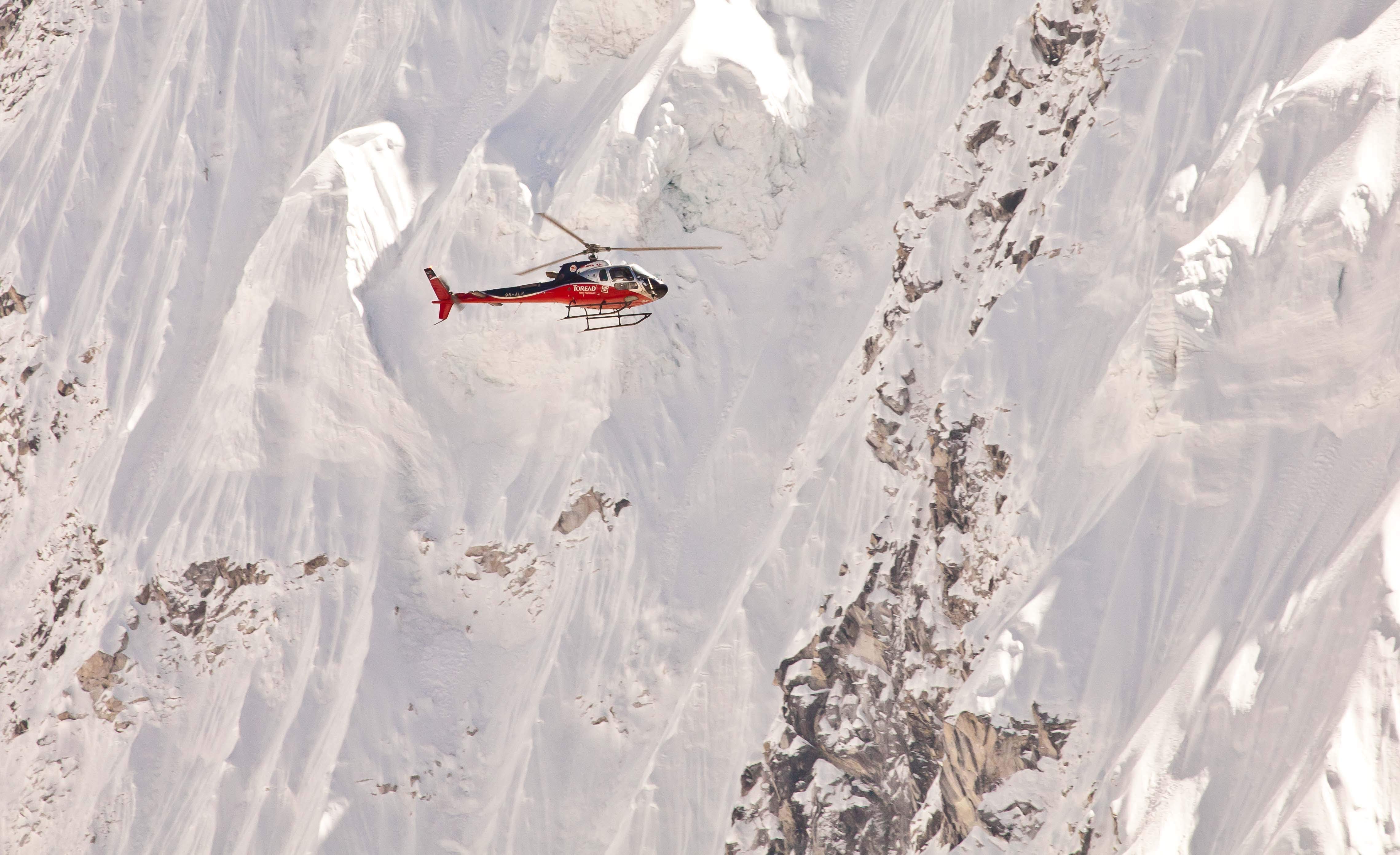
  • Helicopter flights to Lukla or directly into the Everest region
  • Helicopter return options from Everest Base Camp or other locations

During bad weather or peak season flight delays, overland routes via Salleri and Paiya can provide reliable alternative access to the Everest region.

For trekkers seeking additional comfort, time-saving travel, or luxury experiences, helicopter transportation can also be arranged depending on weather and operational conditions.

Mountain King Treks carefully manages all Everest region transportation logistics to help ensure safe, smooth, and flexible travel arrangements throughout your Himalayan adventure.

Accommodation and Food during Everest Treks

Accommodation in the Everest region consists of locally operated tea houses and mountain lodges.

Facilities include:

  • Simple twin rooms
  • Communal dining areas
  • Hot meals and drinks
  • Basic toilets (varies by altitude)

Food options include dal bhat, noodles, fried rice, soups, potatoes, pasta, eggs, pancakes, tea, and coffee.

Luxury trekking packages include upgraded lodges, better rooms, and improved facilities.

Everest Trekking Permits and Entry Fees

Required permits:

  • Sagarmatha National Park Permit
  • Khumbu Pasang Lhamu Rural Municipality Permit

Some trekking routes may require additional permits depending on the itinerary.

Mountain King Treks handles all permit arrangements for travelers.

Why Choose Mountain King Treks for Everest Region Trekking

Mountain King Treks is a trusted Himalayan trekking company specializing in Everest Region Trekking with over 35 years of field experience in Nepal’s adventure tourism industry.

The company is led by veteran trekking guide Govinda Prasad Sapkota, who has more than 35 years of experience in trekking, mountaineering logistics, and remote Himalayan expedition management across Nepal.

Our team ensures:

  • Safe and well-managed trekking operations
  • Experienced Sherpa guides and porters
  • Proper acclimatization planning
  • Flexible and personalized itineraries
  • Deep cultural understanding of the Himalayas
  • Strong emergency and support system
  • Responsible tourism and community support

We focus on creating authentic, safe, and meaningful Himalayan experiences for every traveler.

Essential Packing List for Everest Trekking

  • Down jacket
  • Sleeping bag
  • Waterproof clothing
  • Trekking boots
  • Warm layers
  • Gloves and hat
  • Sunglasses and sunscreen
  • Trekking poles
  • Water bottles
  • First aid kit
  • Backpack

Travel Insurance and Safety Information

Travel insurance is mandatory for Everest trekking and must cover high-altitude trekking and helicopter evacuation.

Safety measures include:

  • Professional guides
  • Acclimatization schedules
  • Emergency response planning
  • Real-time weather monitoring

Frequently Asked Questions about Everest Region Trekking

How difficult is Everest Region Trekking?

Difficulty depends on the trekking route. Some treks are suitable for beginners, while others require strong fitness and previous high-altitude trekking experience.

What is the best Everest trek for beginners?

The Everest View Trek and Everest Panorama Trek are excellent options for beginners and families.

Do I need a guide for Everest trekking?

Hiring a professional guide is highly recommended for safety, navigation, cultural understanding, and overall trekking experience.

How many days are required for Everest Base Camp Trek?

Most Everest Base Camp Treks require 12 to 16 days depending on the itinerary and acclimatization schedule.

Is altitude sickness common in Everest trekking?

Altitude sickness can affect trekkers above 3,000 meters, so proper acclimatization and gradual ascent are important.

What is the best time for Everest Region Trekking?

Spring (March to May) and autumn (September to November) are the best seasons for clear mountain views, stable weather, and comfortable trekking conditions.

How high is Everest Base Camp?

Everest Base Camp is located at an altitude of 5,364 meters (17,598 feet) above sea level.

Can beginners do Everest Base Camp Trek?

Yes, beginners with good physical fitness, proper acclimatization, and enough preparation can successfully complete the Everest Base Camp Trek.

What permits are required for Everest trekking?

Trekkers need the Sagarmatha National Park Permit and Khumbu Pasang Lhamu Rural Municipality Permit.

Is travel insurance necessary for Everest trekking?

Yes, travel insurance covering high-altitude trekking and emergency helicopter evacuation is strongly recommended.

What kind of accommodation is available in the Everest region?

Most trekking routes offer tea houses and mountain lodges with basic but comfortable facilities, meals, and warm hospitality.

Is WiFi and charging available during the trek?

WiFi, mobile network, and charging facilities are available in many villages and lodges, usually with additional charges at higher altitudes.

How cold does it get in the Everest region?

Temperatures vary by season and altitude. Nights can fall below freezing, especially during winter and at higher elevations.

What food is available during Everest treks?

Trekkers can enjoy Nepali dal bhat, noodles, rice dishes, soups, pasta, potatoes, pancakes, tea, coffee, and bakery items.

Are helicopter services available in the Everest region?

Yes, helicopter services are available for luxury tours, emergency evacuations, scenic flights, and helicopter return options from Everest Base Camp.

Which airport is used for Everest trekking?

Most Everest treks begin with a flight to Lukla Airport, usually from Kathmandu or Ramechhap during peak trekking seasons.

Can I customize my Everest trekking itinerary?

Yes, trekking itineraries can be fully customized based on fitness level, travel style, interests, and available time.

Is Everest trekking safe?

Yes, Everest trekking is generally safe with proper acclimatization, experienced guides, careful planning, and responsible trekking practices.

What should I pack for Everest trekking?

Essential items include warm clothing, trekking boots, sleeping bag, waterproof gear, sunglasses, gloves, trekking poles, and personal medication.

Why choose Mountain King Treks for Everest trekking?

Mountain King Treks offers experienced local guides, personalized service, safe trekking management, flexible itineraries, and over 35 years of Himalayan adventure experience.

Plan Your Everest Region Adventure

Planning your journey in the Everest region is the beginning of an unforgettable Himalayan experience filled with Sherpa culture, breathtaking mountain views, and lifelong memories. With the support of our experienced trekking experts, you can enjoy a safe, smooth, and truly meaningful adventure in the heart of the Khumbu Himalayas.

From peaceful Everest View Treks to iconic Everest Base Camp journeys and thrilling high mountain passes, we help you turn your Himalayan dream into reality with care, comfort, and local expertise.

📧 info@mountainkingtreks.com

📞 WhatsApp / Viber: +977-9841566449

Book Your Everest Trek → Travel with trusted local trekking experts

Customize Your Everest Adventure → Create your perfect Himalayan journey

Discover the beauty, Sherpa culture, and spirit of the Himalayas with Mountain King Treks.

Explore More Trekking Adventures in Nepal

Nepal offers many world-class trekking regions including Annapurna, Manaslu, Langtang, Mustang, Dolpo, Kanchenjunga, and Makalu—each offering unique Himalayan landscapes, cultural experiences, and unforgettable adventure journeys beyond Everest Region Trekking in Nepal.

15 adventures

Trekking packages in Everest Region Trekking.

Arun Valley to Everest Base Camp Trek
22 days Moderate
5
Everest 5,545m

Arun Valley to Everest Base Camp Trek

Trek from Arun Valley to Everest Base Camp with Mountain King Treks. Experience remote trails, Sherpa villages...

From
$2,175
View trip
Pikey Peak Trek
10 days Moderate
5
Everest 4,055m

Pikey Peak Trek

Experience the Pikey Peak Trek, a scenic Everest view trek through Sherpa villages, forests, and ridges with s...

From
$975
View trip
Dudh Kunda Trek
10 days Easy
5
Everest 4,350m

Dudh Kunda Trek

Experience the sacred Dudh Kunda Trek in the Everest Region, exploring alpine lakes, Sherpa culture, forests,...

From
$1,050
View trip
Everest Panorama Trek
9 days Moderate
5
Everest 3,887m

Everest Panorama Trek

Explore the 9-day Everest Panorama Trek visiting Tyngboche, Khumjung, and Hotel Everest View with classic Hima...

From
$1,389
View trip
Everest Base Camp Trek by Road
17 days Moderate
5
Everest 5,545m

Everest Base Camp Trek by Road

Everest Base Camp Trek by Road from Kathmandu via Salleri and Paiya. Enjoy a scenic overland drive, Sherpa vil...

From
$1,650
View trip
Ama Dablam Base Camp Trek
13 days Moderate
5
Everest 4,600m

Ama Dablam Base Camp Trek

Discover the Ama Dablam Base Camp Trek, a 13-day Everest region journey through Sherpa villages, Namche Bazaar...

From
$1,570
View trip
Mani Rimdu Festival Trek
9 days Moderate
5
Everest 3,887m

Mani Rimdu Festival Trek

Join our 9-day Mani Rimdu Festival Trek in the Everest region. Enjoy cultural immersion at Tengboche Monastery...

From
$1,350
View trip
Everest Sherpa Cultural Trek
13 days Moderate
5
Everest 3,985m

Everest Sherpa Cultural Trek

Experience the Everest Sherpa Cultural Trek through Thame, Khumjung, Phortse, and Pangboche, exploring authent...

From
$1,750
View trip
Everest Base Camp Trek from Jiri
20 days Moderate
5
Everest 5,545m

Everest Base Camp Trek from Jiri

Follow the original Everest expedition trail from Jiri to Everest Base Camp, with gradual acclimatization, She...

From
$1,756
View trip
Luxury Everest Base Camp Trek with Helicopter Return
12 days Moderate
5
Everest 5,545m

Luxury Everest Base Camp Trek with Helicopter Return

Experience the Luxury Everest Base Camp Trek with helicopter return, a premium Himalayan journey with luxury h...

From
$8,500
View trip
Everest View Trek
8 days Moderate
5
Everest 3,880m

Everest View Trek

Everest View Trek in Nepal is a short and scenic Himalayan journey offering breathtaking views of Mount Everes...

From
$1,332
View trip
Gokyo Lakes Trek – Alpine Lakes & Glacier Trails
14 days Moderate
5
Everest 5,357m

Gokyo Lakes Trek – Alpine Lakes & Glacier Trails

Experience the Gokyo Lakes Trek, a scenic Himalayan journey from Lukla to Gokyo. Visit turquoise lakes, Himala...

From
$1,634
View trip
Talk to an Expert